Oracle Just Admitted the AI Data Center Splurge Might Not Pay Off. Philippine Telcos Are Still Building the Tower.
In its latest annual filing, Oracle warned that tens of billions in AI infrastructure capex could strand capacity, default on customer bills, and leave hyperscalers holding the bag. PLDT, Globe, and Ayala are borrowing heavily to chase the same boom - from a country that still cannot keep the lights on reliably.
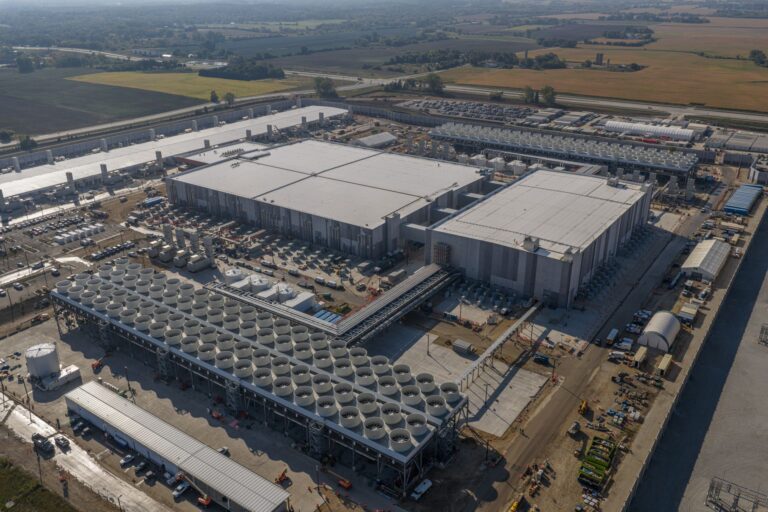
Larry Ellison spent the past eighteen months telling investors that Oracle Cloud was the sleeper pick in the AI arms race. The company signed blockbuster deals with OpenAI and Meta, broke ground on the Stargate campus in Abilene, Texas, and watched its stock briefly make Ellison the richest man on earth. Then, in its annual report filed this week, Oracle did something rarer in Silicon Valley than a profitable quarter: it told the truth about the downside.
The filing is a masterclass in risk disclosure - forty-odd pages of everything that can go wrong when you borrow tens of billions of dollars to pour concrete and bolt GPUs into racks for customers who are, themselves, borrowing tens of billions of dollars to rent those GPUs. Capital expenditures hit $55.7 billion in fiscal 2026, up from $21.2 billion the year before. Oracle is guiding for $90 billion to $95 billion in capex in fiscal 2027. Free cash flow remains negative. Credit-default-swap traders are paying attention.
Some of our customers may be highly leveraged and subject to their own operating and regulatory risks and, even if our credit review and analysis mechanisms work properly, we may experience risks of non-payment and non-performance in our dealings with such parties.
Oracle never names OpenAI in that paragraph. It does not need to. More than $300 billion of Oracle's $553 billion in remaining performance obligations - contracted revenue it has booked but not yet collected - comes from a single highly leveraged AI lab that loses money on every token and is perpetually one funding round away from a down round. Oracle built the infrastructure. OpenAI promised the cheques. Wall Street bought the proxy. If either side wobbles, the Jenga tower does not lose one block - it loses the bottom row.
This is the IOU economy we described last month: hyperscalers invest in AI labs, mark up their equity stakes, book the gains as income, and watch the labs wire the same cash back as cloud bills. Oracle's disclosure simply adds the adult footnote - what happens when the party passing the IOU cannot make the next payment.
Now zoom out to the Philippines, where the national ambition is to become a regional data-center hub and every major conglomerate has discovered that the words "AI-ready" fit neatly into a loan application.
PLDT is furthest along. Its data-center arm VITRO filed this month for the country's first digital-infrastructure REIT, aiming to raise up to P24.2 billion by selling nearly half of the business to public investors. Read the use-of-proceeds slide and the word "growth" barely appears. Up to P16.6 billion is earmarked to repay loans that funded VITRO Sta. Rosa—a 50-megawatt facility in Laguna—and to honour ePLDT's existing subscription commitments. Another P6.7 billion goes to more build-out. Chairman Manuel V. Pangilinan has been candid that the listing is, in large part, a balance-sheet exercise: unlock asset value, pay down debt. PLDT's gross debt stood at P297.3 billion as of March. VITRO's colocation revenue is real—it grew 15 percent in 2025, occupancy hit 74 percent—but the REIT's initial portfolio includes only eight of eleven sites and 24 megawatts of capacity. The biggest, most leveraged asset stays on the parent's books until the market proves it can absorb the risk.
Globe Telecom is running the same playbook with different branding. The telco budgeted P56 billion for 2026 capex—network upgrades, submarine cable consortium stakes, and data-center expansion through its joint venture with ST Telemedia Global Data Centres and Ayala Corporation. STT GDC Philippines operates seven facilities totalling nearly 150 megawatts and is racing to exceed 30 megawatts of new capacity this year, pitching "high-density, AI-driven workloads" to enterprise clients. In June, Globe signed a P5 billion term loan with BDO Unibank for capex and debt refinancing. First-quarter financing costs doubled to P6.39 billion. Attributable net income fell 20 percent. The AI infrastructure is going up; the interest bill is going up faster.
Ayala Land's partnership with PAG's Flow Digital Infrastructure secured a P10.8 billion, ten-year facility from Landbank—the first P2.4 billion tranche signed in January for a Biñan, Laguna campus targeting 36 megawatts at full build-out. Singapore's Digital Halo closed P2.786 billion in project finance with RCBC for an "AI-ready" Tier 3 campus in Cainta, Rizal, expandable to 70 megawatts. The International Finance Corporation is weighing a $170 million investment in YCO Global. Every press release uses the same vocabulary: hyperscale, carrier-neutral, AI-ready. Every capital structure rhymes: long-dated debt, phased construction, occupancy assumptions that depend on tenants who are themselves betting on an AI revenue curve that Oracle just warned might not materialise.
None of this means Philippine data centers are a mirage. Enterprise demand is genuine. Cloud adoption is rising. The BSP's digital-economy targets assume more local compute, not less. PLDT's ICT revenues hit P36.3 billion last year, covering three-quarters of enterprise income. Globe's data revenue keeps climbing. There is a credible case for building fiber, power, and rack space in a country of 115 million people with accelerating digital payments and a booming BPO sector.
But credible demand is not the same as credible returns at today's leverage levels.
The Philippine bet differs from Oracle's in one crucial respect: scale. Oracle's single OpenAI exposure dwarfs the entire VITRO REIT. PLDT and Globe are not underwriting frontier-model training runs; they are selling colocation and connectivity to banks, telcos, and government agencies. The credit risk is more diversified and the contracts shorter. That is comfort—until you remember that the global AI capex cycle is what is driving occupancy forecasts, green-power purchase agreements, and the very idea that a 12 percent-yielding data-center REIT belongs on the same exchange that could not fill its 2025 IPO quota without rewriting listing rules.
For the broader economy, the implications are less about a Silicon Valley correction than about where Philippine capital gets stuck. Data centers are power-hungry, dollar-linked, and slow to depreciate. They compete with roads, ports, and manufacturing for the same pool of long-term financing. Landbank and RCBC are enthusiastically lending into the sector; the grid that is supposed to feed these campuses still suffers brownouts in the provinces where politicians promise "digital sovereignty." If global hyperscalers pause expansion—as Oracle's filing explicitly contemplates—Philippine operators will face the classic infrastructure trap: fixed debt, semi-empty halls, and pressure to cut rates to fill racks.
Retail investors eyeing the VITRO REIT should read Oracle's 10-K the way they would read a prospectus risk factor, because it is the same risk in a different accent. The REIT will distribute 90 percent of distributable income, which sounds generous until you ask where that income comes from when the tenants' tenants are AI labs trading equity for compute credits. The circular trade that looked like genius on a Goldman Sachs slide looks like a payment-default clause in a Delaware filing.
Oracle's warning will not stop construction in Laguna, Rizal, or Abilene. Construction loans are already signed; GPUs are on order; politicians have cut ribbons. But it does puncture the premise that someone, somewhere, has done the math and found a straight line from $95 billion in annual capex to sustainable free cash flow. The Philippines is building the downstairs half of a Jenga tower whose upper floors are leased to companies that admit, in their own suppliers' SEC filings, that they might not pay the rent. The tower may yet stand. It would be the first time in this cycle that everyone holding an IOU cashed out before the music stopped.